Incentive availability is not the primary adoption constraint in 2026. Reliable delivery is.
Billions of dollars are available to help families upgrade to high-efficiency HVAC and water heating equipment. And yet, at the end of nearly every program year, some portion of those dollars sits unspent, while contractors walk away from projects that could have qualified.
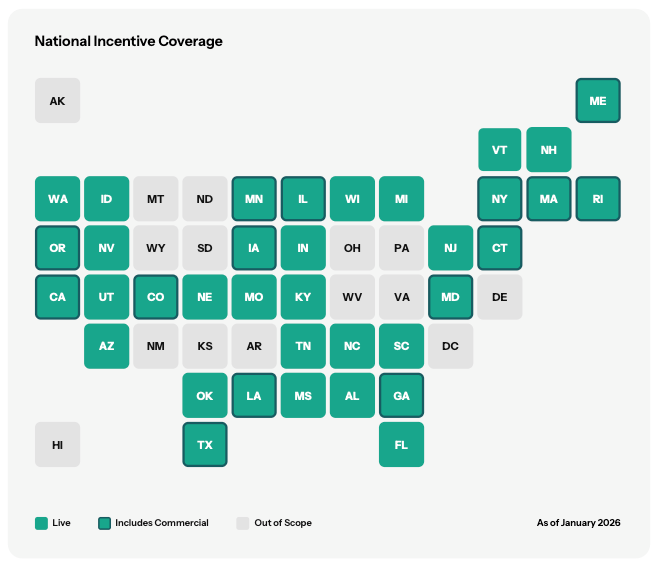
The 2026 Incentive Benchmark Report draws on Rock Rabbit’s database of 155+ programs, 1,000+ active incentives across 36 states, and work with more than 800 contractor partners. The through-line in the data is consistent: incentive availability is no longer the primary adoption constraint. Reliable delivery is.
The state of the market
The transition to high-efficiency electric HVAC and water heating is no longer a technology question. The equipment is ready.
What isn't ready, in too many cases, is the system around the equipment: the applications, documentation requirements, eligibility checks, and approval timelines that stand between a project being quoted and a rebate being paid.
In 2026, that gap matters more than ever. Persistent inflation, growing electricity demand, and rising rates have pushed customer affordability to crisis levels. The rollback of federal tax credits has added complexity to an upgrade market that depends heavily on trade ally participation. And trade allies themselves are short on supply and pressed for time.
In this environment, the question is whether funding can be delivered reliably enough that contractors will build it into their quotes and customers will trust the number.
What the report covers
We analyzed program design across every major region of the country. The full report walks through national benchmarks on incentive values, structure, and eligibility; where submission friction is concentrated and why; a deep dive on trade ally engagement; and six structural best practices for reducing the "cost of compliance" without weakening oversight.
A few of the patterns that emerge across the data:
- The cost of compliance is real. A meaningful share of program funding is absorbed by administrative overhead rather than reaching equipment or families.
- Predictability is rare. Most programs don't offer contractors a way to lock in a rebate before the project starts, leaving quoted incentives susceptible to mid-project changes.
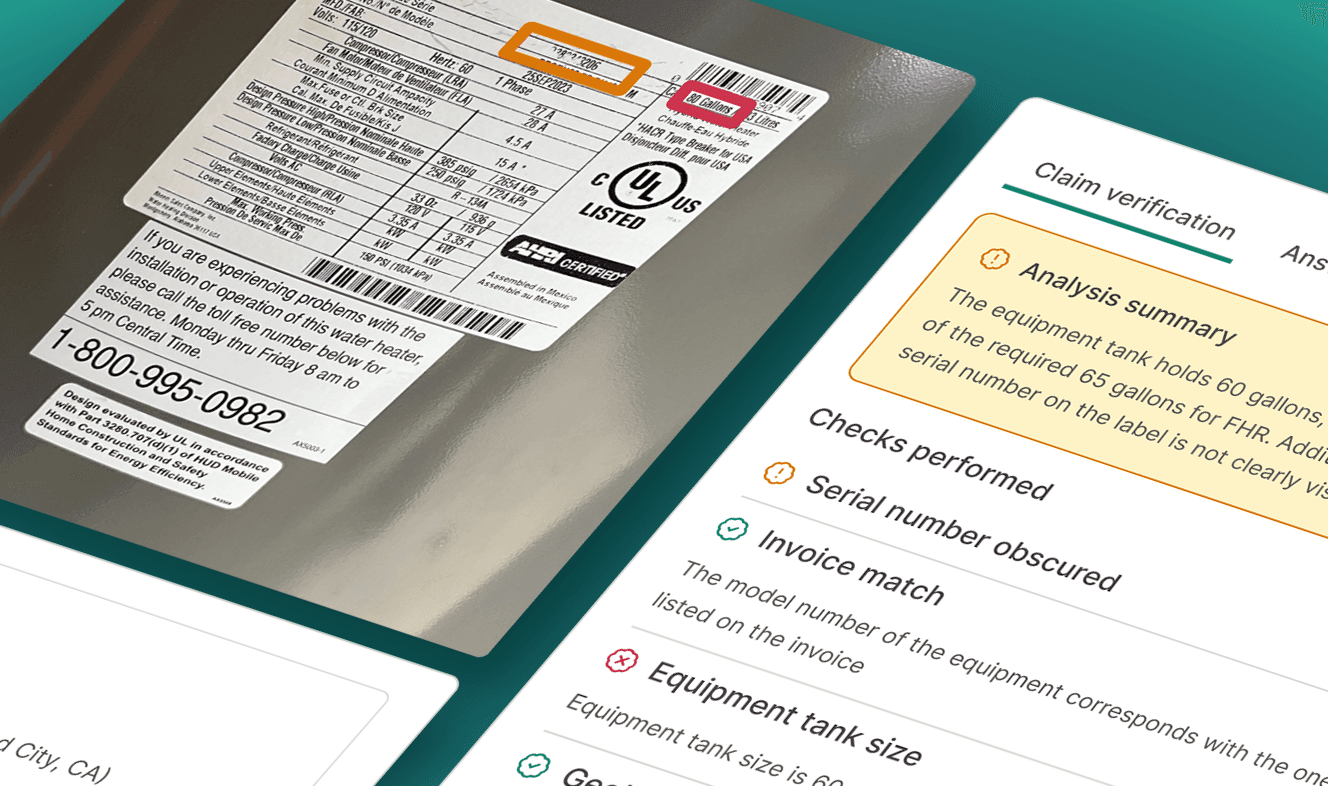
- Verification has room to modernize. Many of the most common documentation requirements are strong candidates for automated validation rather than manual review.
- Submission complexity varies dramatically by program design, and that complexity can predict where participation stalls.
Why it matters now
Modernizing program delivery is a critical lever for addressing the affordability crisis facing end customers. The industry can maintain rigorous verification standards without hindering the participation rates essential to hitting affordability, efficiency, and decarbonization goals.
Reducing the cost of compliance means a greater share of program funding reaches equipment and families. It also makes contractors more likely to recommend the high-efficiency option to their customers.
Administrative friction is not the only barrier to adoption. But it is the most solvable lever within incentive providers' direct control. That's why we made it the focus of the report.
Read the report
The 2026 Incentive Benchmark Report is available now. Inside, you'll find national benchmarks on incentive values and structure, a detailed look at submission friction and eligibility complexity, a deep dive on trade ally engagement, and the six best practices in full.
Complete the form below or use this link to download the report.
If you're running a program, making equipment decisions, or working with contractors, we'd love to hear where the data lines up with your experience. Shoot us an email at info@rockrabbit.ai.