Scaling Program Impact with AI Claim Validation
By Rock Rabbit
Empowering program administrators to review incentive claims faster and more accurately by automating the most cumbersome parts of validation.
Incentive programs are vital to driving affordable efficiency upgrades and making the most of existing energy infrastructure. Managing an influx of rebate applications, however, can create significant administrative bottlenecks. For program administrators, reviewing each project manually often takes at least 10 to 15 minutes.
Reviewers are frequently bogged down by unmet equipment requirements, missing information in documents, irrelevant file submissions, and the task of validating old, complex equipment configurations.
In other words, reviewers are faced with a high volume of loosely organized data. This is exactly the type of problem that purpose-built AI tools can help utilities and program administrators solve.
The Validation Bottleneck
True claim validation requires both evaluating data validity and comparing data across multiple sources to confirm consistency. Often, critical details are buried in hard-to-read documents, public databases, or proprietary industrial encodings that are difficult for humans to decipher quickly.
The Solution: AI Claim Validation
Rock Rabbit is addressing this friction with AI Claim Validation, a new feature designed to reduce manual work and dramatically increase review efficiency.
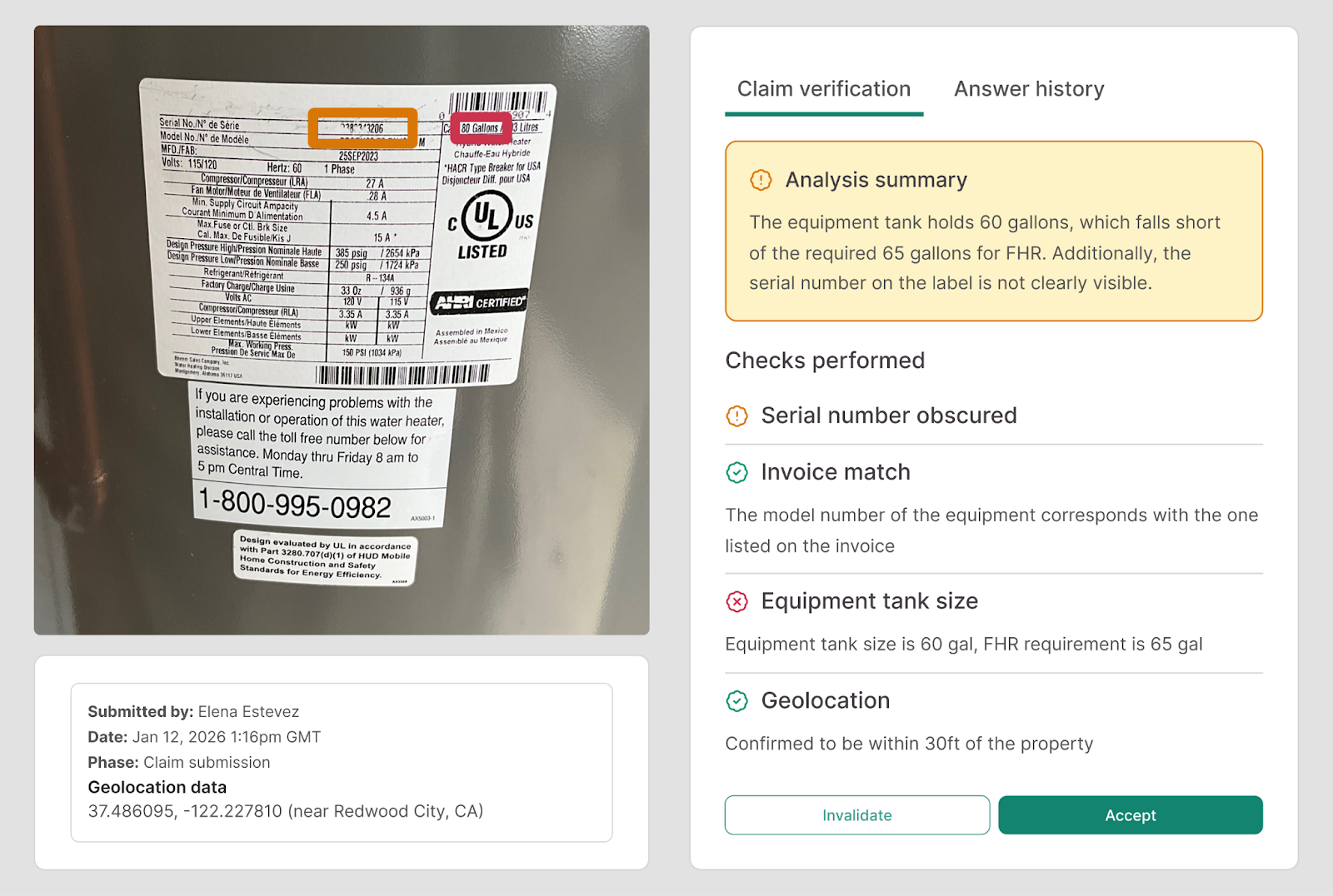
Instead of reviewing every application step-by-step from scratch, program administrators are equipped with AI-driven tools that perform the heavy lifting. For each submitted answer, our AI cross-references the data against uploaded files, other user answers, and external sources – providing the human reviewer with the actionable information they need for a final decision.
Here is how our AI accelerates the review process:
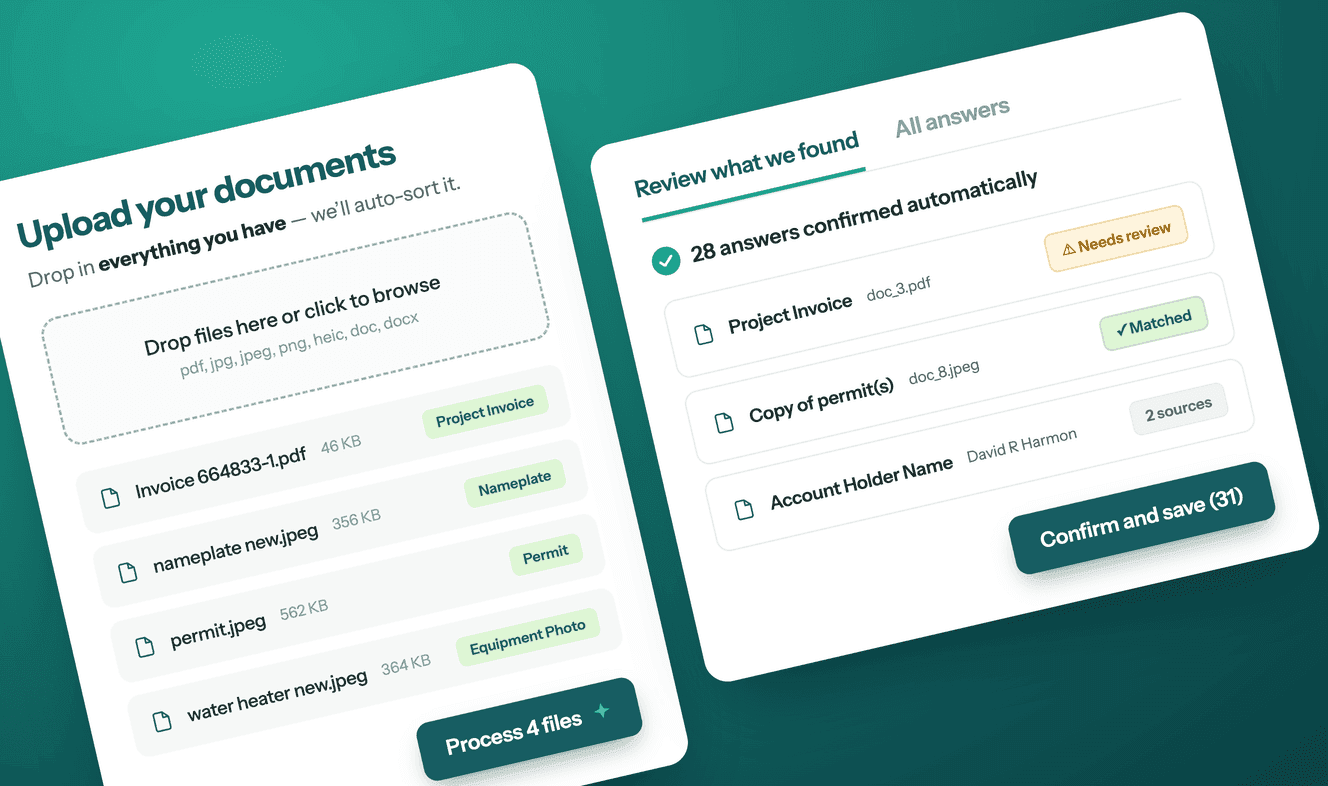
- Unlocking Hidden Information: Our agents identify where information lives in documents and on equipment and surfaces those answers together; no more searching across user uploads to find the right details.
- Property & Consistency Checks: The system automatically validates details like address and square footage against public records.
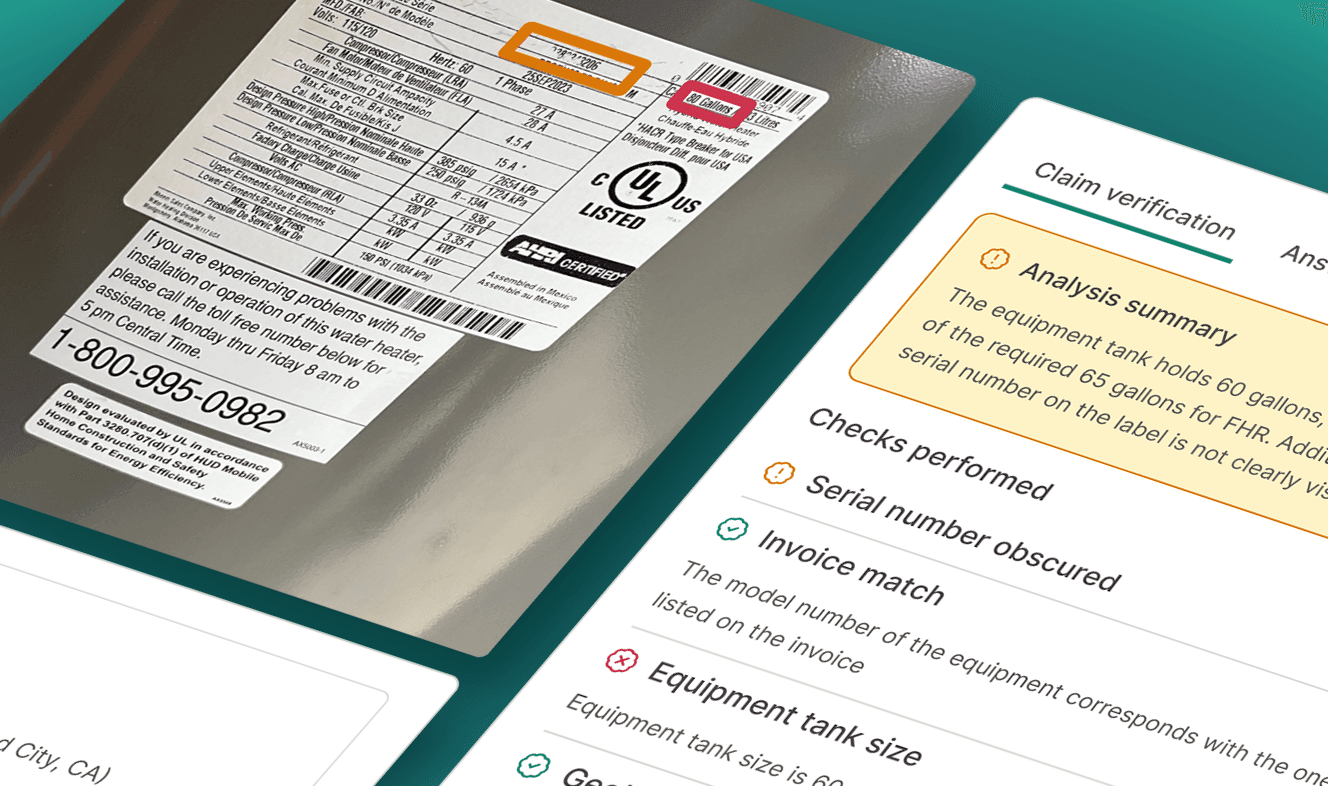
- Actionable Information for Humans: Reviewers receive a simple pass/fail summary of all the checks performed for each answer. We also provide labeled reference files with the extracted data clearly highlighted, so program administrators can easily review the evidence and make a final decision with the relevant information.
Our AI Governance Framework
Rock Rabbit built our AI tools with domain knowledge that enables context-driven decisions and strict guardrails that ensure human decision-makers see the right information at the right time.
These tools are designed from the ground up with responsible deployment in mind. Rock Rabbit's AI governance framework draws on the standards utilities themselves are increasingly referencing to define their own internal AI policies.
These include the NIST AI Risk Management Framework to adhere to standards for valid, reliable and transparent AI as well as the DOE’s internal AI guidance supporting administrative efficiency and anti-fraud objectives.
Here’s how these principles manifest in AI Claim Validation:
- Transparency by Design: The tool adopts a glass box approach, where every AI determination includes a specific justification.
- Human-in-the-Loop: The system serves as a first auditor. High-confidence matches are staged for approval and low confidence matches are flagged for closer staff review.
- Privacy-first: A private, enterprise-grade environment guarantees utility data is never used to improve the large foundational models. Sensitive data is never passed to the models.
These principles: transparency, human oversight, and a commitment to data privacy are embedded into the core architecture of our tools and form a cohesive governance layer that utilities can trust.
We’d Love to Hear From You
By tackling "hard for humans" tasks first, we help utilities build trust in AI-driven validation. Ultimately, this allows teams to focus on scaling their program’s impact rather than getting lost in the paperwork. If you have thoughts on how utility and energy stakeholders can deploy AI tools to streamline the customer experience, we’d love to hear from you.